Markets Stocks ETFs & Fonds
Digital Infrastructure Equity: Why Scale Isn’t Everything
Mina Pacheco Nazemi & Addie Sparks, BARINGS
Small-scale digital infrastructure, especially edge data centers and bulk fiber platforms, is emerging as an increasingly attractive and undervalued opportunity. These assets can offer critical infrastructure characteristics, inflation protection potential and value retention, with speed, flexibility and resilience needed in a rapidly evolving digital world.
Insights by Mina Pacheco Nazemi, Head of Diversified Alternative Equity & Addie Sparks, Director, Diversified Alternative Equity | BARINGS
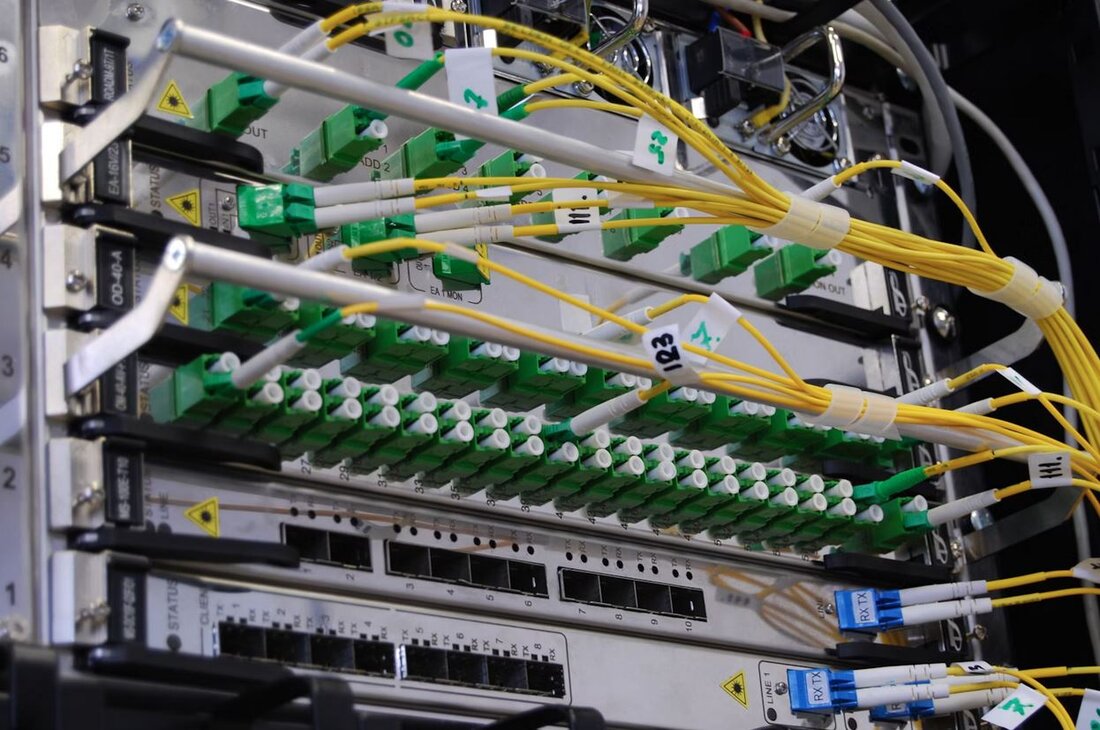
Small-Scale Digital Characteristics
The digital economy is growing more complex, localized and bandwidth intensive. Despite this, most of today’s digital infrastructure investment remains focused on large hyperscale builds that exhibit long build timelines, high capital intensity and are increasingly exposed to grid, regulatory and latency constraints. Small-scale digital infrastructure, particularly edge data centers and bulk fiber platforms, may be an attractive and underpenetrated opportunity in our view. Small-scale assets retain the characteristics that make large-scale infrastructure compelling: intrinsic value of the hard asset, physical durability, inflation protection potential and contracted revenue. Facilities operate under medium- or long-term service agreements with built-in inflation escalators, diversified tenant bases and limited customer concentration. The capital structures tend to be conservative, with modest leverage and the flexibility to strategically reinvest cash flow towards future growth.
Unlike hyperscale assets, small-scale infrastructure thrives on proximity. Positioned close to users, digital services and industrial zones, it is designed to serve the edges of networks. These assets can benefit from established customer bases and strategic locations. Their simplified and modular profile can help enable faster deployment timelines, lower permitting risk and better alignment with local demand.
What Sets It Apart
Agility is a key differentiator of small-scale digital infrastructure. While large-scale infrastructure assets can offer economies of scale, they also can experience grid interconnection delays and customer concentration risk. Smaller assets can move faster, provide greater security and respond to localized demand shifts.
Lower Leverage, Higher Flexibility
One of the structural advantages of investing in small-scale digital infrastructure assets is the ability to enter platforms at lower leverage and build value through growth. With large-scale infrastructure assets (i.e. hyperscale data centers), capital is often deployed at premium valuations to acquire fully built, mature projects. Although a high interest rate environment can make large-scale infrastructure benefits difficult to sustain, this asset class historically delivered reliable yield and portfolio stability and elevated valuations. Small-scale platforms allow investors to deploy capital incrementally, at lower multiples, in line with milestones and performance. There is less inherent flexibility with large-scale infrastructure assets.
The lower leverage typically used in these strategies is designed to reduce the risk profile. Without the burden of aggressive debt service requirements, capital can be directed toward expansion, modernization, or contract growth. And because many of these assets are earlier in their lifecycle, reinvestment can meaningfully move the needle—driving both EBITDA growth and multiple expansion over time.
Edge Data Centers: Meeting the Need for Localized Compute
Edge data centers are smaller facilities that bring computing and data storage closer to the end users, possibly enabling faster, more efficient processing of data at the “edge” of the network, as opposed to routing everything back to a distant hyperscale cloud provider. By processing data closer to where it is generated or consumed, edge data centers reduce latency, or the time it takes for data to travel from one point to another in a system, increase network performance and improve the reliability of digital services, which is critical for real-time applications.
The demand for edge data centers has surged as industries rely increasingly on applications like autonomous vehicles, virtual reality and telemedicine—services that require low-latency processing. At the same time, the Internet of Things, or the network of interconnected devices, sensors and systems that collect and exchange information in real time, has led to an explosion of data. Smart cities, and video surveillance demands local, real-time data processing capabilities that traditional centralized data centers may not be equipped to handle in
real-time.
KEY DRIVERS OF DEMAND FOR EDGE DATA CENTERS
Reduced Latency
Real-time applications like smart manufacturing, telemedicine and autonomous vehicles require immediate responses. Locating computing power closer to users cuts down milliseconds, improving functionality and user experience.
Bandwidth and Cost Efficiency
Processing and filtering data locally reduces the need to send vast amounts of information back to centralized hubs. This is cheaper, faster and eases the burden on major networks critical for IoT sensors, video surveillance and smart cities.
Resilience and Redundancy
Regional edge centers can help sustain operations by handling localized workloads and reducing reliance on a single cloud region. This distributed approach improves continuity during service disruptions.
Data Sovereignty and Compliance
More countries are pushing for local data storage and control. Edge facilities enable governments and enterprises to meet these requirements without relying solely on global cloud providers.
Sustainability and Energy Use
Distributed, smaller data centers—especially when paired with local renewables—can reduce energy transmission losses and improve overall efficiency compared to massive, centralized farms.
ATTRACTIVE CHARACTERISTICS FOR INVESTORS
While the technical and operational benefits of edge data centers are clear, there are several factors that make them particularly attractive from an investor’s perspective:
Faster Deployment
It can take 12–18 months to develop a well-located edge data center compared to 3–5 years for a hyperscale facility. Faster deployment timelines allow investors to capture demand and cash flow sooner.
Simpler Grid Interconnection
Connecting a hyperscale data center to the power grid is often a multiyear process, requiring major transmission upgrades. In contrast, edge centers typically have smaller power requirements (often under 5 MW), making interconnection faster and easier, and reducing execution risk.
Strong Contract Profile
Edge centers can secure multiple mid-sized enterprise tenants, spreading risk and often feature medium-term contracts with embedded inflation escalators. These characteristics can help create stable, inflation-protected cash flows with strong upside from regional demand growth and strategic consolidation.
More Flexible Real Estate
Edge centers can often be built on smaller parcels—typically just an acre or two—in urban or suburban areas, avoiding the large land aggregation challenges common with hyperscale data centers, which can require hundreds of acres.
Strategic M&A Potential
The edge market is still highly fragmented, offering roll-up opportunities to create regional networks that may be attractive to larger buyers or strategic operators.
Multiple Exit Strategies
Investors in edge data centers can benefit from multiple exit pathways. These assets can be sold to larger hyperscale operators telecom companies and infrastructure funds looking to secure a regional data center network. Additionally, edge platforms can be rolled up into larger portfolios of smaller, regional digital assets, creating value through consolidation or can be simply managed to cashflow and yield to investors.
“Fast deployment, simple grid interconnection, strong contract profile, flexible real estate, strategic M&A potential, and multiple exit strategies make edge data centers attractive from an investor’s prospective.”
Bulk Fiber Platforms: Closing the Last-Mile Gap
Bulk fiber infrastructure delivers high-speed, dedicated fiber connections directly to residential and commercial buildings. Bulk fiber ensures that users inside multi-tenant buildings, whether residential complexes, office parks, hospitals, or industrial facilities, receive full fiber bandwidth right to their doorsteps. This is crucial for modern business operations and consumer demands, where data consumption is skyrocketing, and the need for robust, low-latency connectivity is more critical than ever. Unlike fiber-to-the-home (FTTH) models, which often carry a more private equity-like risk profile due to greater reliance on customer uptake, marketing execution and exposure to overbuild, bulk fiber strategies tend to offer more stable demand and infrastructure-like characteristics.
KEY DRIVERS OF DEMAND FOR BULK FIBER PLATFORMS
Data Consumption Growth
Residential and business users alike are consuming exponentially more data, driven by video, cloud applications, remote work and IoT adoption. Older network architectures may struggle to keep up with modern bandwidth requirements.
Business-grade Reliability
Enterprises increasingly require dedicated fiber connections for security, speed and redundancy reasons, especially as operations move toward the cloud.
Competition and Tenant Retention
In multi-tenant buildings, fiber connectivity is becoming a “fourth utility” alongside water, electricity and HVAC. Buildings without fiber can be a leasing disadvantage in many markets.
Futureproofing
Fiber has essentially unlimited upgrade potential compared to coaxial or copper alternatives, making it a superior long-term infrastructure investment.
ATTRACTIVE CHARACTERISTICS FOR INVESTORS
Faster Build and Quicker Cash Flow
Building bulk fiber infrastructure is typically faster than large-scale fiber or utility projects. For example, deploying fiber into existing urban or suburban buildings can be completed in a fraction of the time it takes to develop large-scale greenfield projects. Depending on the size of the deployment, new bulk fiber networks can be operational within 6–12 months, allowing investors to begin capturing revenue from long-term contracts quicker.
Lower Capital and Regulatory Barriers
Permitting and regulatory approvals for bulk fiber deployments tend to be more straightforward compared to larger-scale projects. Building fiber within urban or suburban areas often requires fewer land acquisitions, less environmental impact analysis and simpler permitting processes. Localized bulk fiber providers can move faster and more efficiently to establish connections.
Network Density and Local Control
Small-scale bulk fiber players may benefit from the ability to build in dense, localized markets with more control over the customer base. These localized networks can cater to specific business hubs, residential complexes, or other high-demand areas, creating a more stable revenue stream. The higher concentration of customers also makes operational efficiencies more achievable and allows investors to fine-tune services to meet regional demand more effectively.
Scalability and Future Upside
Bulk fiber networks are highly scalable. Once the initial infrastructure is in place, expanding the footprint to additional buildings or districts is relatively straightforward. For example, a regional bulk fiber network can quickly expand by targeting new high-demand areas with minimal incremental investment.
M&A and Exit Potential
Bulk fiber networks in regional markets are attractive to larger players, including national ISPs, telecom companies and infrastructure funds. These buyers are often looking to expand their market share in underserved or high-demand areas and view regional fiber networks as a strategic acquisition opportunity.
Local Utility-Like Status
Over time, bulk fiber networks in highly localized areas may begin to resemble utilities in terms of their necessity to businesses and residents. As fiber becomes increasingly indispensable for businesses, education and entertainment, bulk fiber infrastructure may be regarded as a critical service, further solidifying its position as a valuable asset for investors.
Key Takeaways
Small-scale digital infrastructure offers a compelling financial profile that aligns with the priorities of infrastructure investors: asset-backed security, predictable income and capital-efficient growth. These platforms combine the stability of traditional infrastructure with the agility to respond to evolving digital demand.
By focusing on edge data centers and bulk fiber networks, investors can capitalize on the increasing demand for high-speed connectivity, low-latency applications and more resilient, secure, localized infrastructure. These platforms provide a differentiated combination of growth potential, scalability and flexibility, offering a compelling alternative to traditional, large-scale operationally complex infrastructure investments.
Disclaimer
IMPORTANT INFORMATION
Forecasts in this document reflect Barings’ market views as of the preparation date and may change without notice. Projections are not guarantees of future performance. Investments involve risk, including potential loss of principal. The value of investments and any income may fluctuate and are not guaranteed by Barings or any other party. PAST PERFORMANCE IS NOT INDICATIVE OF FUTURE RESULTS. Examples, portfolio compositions, and investment results shown are for illustrative purposes only and do not predict future outcomes. Actual investments may differ significantly in size, composition, and risk. No assurance is given that any investment will be profitable or avoid losses. Currency exchange rate fluctuations may impact investment value. Prospective investors should consult the offering documents for detailed information and specific risk factors related to any Fund/Strategy mentioned.
Barings is the brand name for the worldwide asset management and associated businesses of Barings LLC and its global affiliates. Barings Securities LLC, Barings (U.K.) Limited, Barings Australia Pty Ltd, Barings Japan Limited, Baring Asset Management Limited, Baring International Investment Limited, Baring Fund Managers Limited, Baring International Fund Managers (Ireland) Limited, Baring Asset Management (Asia) Limited, Baring SICE (Taiwan) Limited, Baring Asset Management Switzerland Sarl, Baring Asset Management Korea Limited, and Barings Singapore Pte. Ltd. each are affiliated financial service companies owned by Barings LLC (each, individually, an “Affiliate”). Some Affiliates may act as an introducer or distributor of the products and services of some others and may be paid a fee for doing so.
NO OFFER: The document is for informational purposes only and is not an offer or solicitation for the purchase or sale of any financial instrument or service in any jurisdiction. The material herein was prepared without any consideration of the investment objectives, financial situation or particular needs of anyone who may receive it. This document is not, and must not be treated as, investment advice, an investment recommendation, investment research, or a recommendation about the suitability or appropriateness of any security, commodity, investment, or particular investment strategy, and must not be construed as a projection or prediction.
Unless otherwise mentioned, the views contained in this document are those of Barings. These views are made in good faith in relation to the facts known at the time of preparation and are subject to change without notice. Individual portfolio management teams may hold different views than the views expressed herein and may make different investment decisions for different clients. Parts of this document may be based on information received from sources we believe to be reliable. Although every effort is taken to ensure that the information contained in this document is accurate, Barings makes no representation or warranty, express or implied, regarding the accuracy, completeness or adequacy of the information.
Any service, security, investment or product outlined in this document may not be suitable for a prospective investor or available in their jurisdiction.
Copyright and Trademark
Copyright © 2025 Barings. Information in this document may be used for your own personal use, but may not be altered, reproduced or distributed without Barings’ consent.
The BARINGS name and logo design are trademarks of Barings and are registered in U.S. Patent and Trademark Office and in other countries around the world. All rights are reserved.
Barings is a $456+ billion* global asset management firm that partners with institutional, insurance, and intermediary clients, and supports leading businesses with flexible financing solutions. The firm, a subsidiary of MassMutual, seeks to deliver excess returns by leveraging its global scale and capabilities across public and private markets in fixed income, real assets and capital solutions